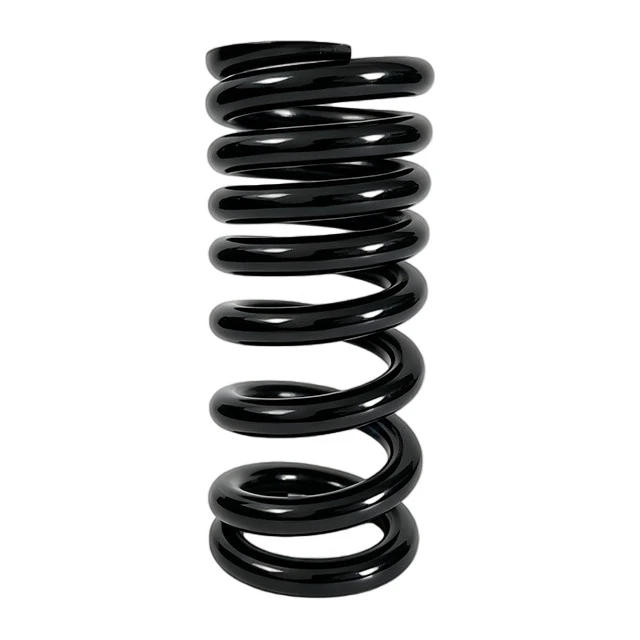
1. Load Requirements: Determining Spring Strength and Safety The load a spring must withstand is the most critical parameter, including the maximum working load (force under normal operating conditions) and the ultimate load (short-term peak force, such as the impact of agricultural machinery during bumps).
- Calculation Method: Based on the weight of the agricultural machinery components and the mode of force application (tension, compression, torsion), the required load is calculated using mechanical formulas (such as Hooke's Law: F=kx, where F is the load, k is the stiffness, and x is the deformation).
- Reference Basis: For repair and replacement, the actual load can be inferred from the damage condition of the old spring (e.g., breakage, permanent deformation) (e.g., frequent breakage may indicate insufficient load capacity). For new designs, agricultural machinery design manuals or parameters of similar models should be consulted.
2. Dimensional Parameters: Matching Installation Space and Motion Requirements
The external dimensions of the spring must be determined based on the installation location of the agricultural machinery to avoid installation failure or motion interference due to dimensional incompatibility:
Length: Includes free length (length when not under load), working length (length under load), and compression/tension limit length (to avoid excessive deformation and failure);
Diameter: For helical springs, pay attention to the wire diameter (diameter of the spring wire) and outer/inner diameter (to ensure it can be installed in the mounting hole or fitted onto the shaft); for leaf springs, pay attention to the width, thickness, and number of leaves;
Number of Coils: The effective number of coils in a helical spring directly affects its stiffness (more coils mean lower stiffness and greater deformation), and needs to be adjusted according to the required deformation range.