

Classification
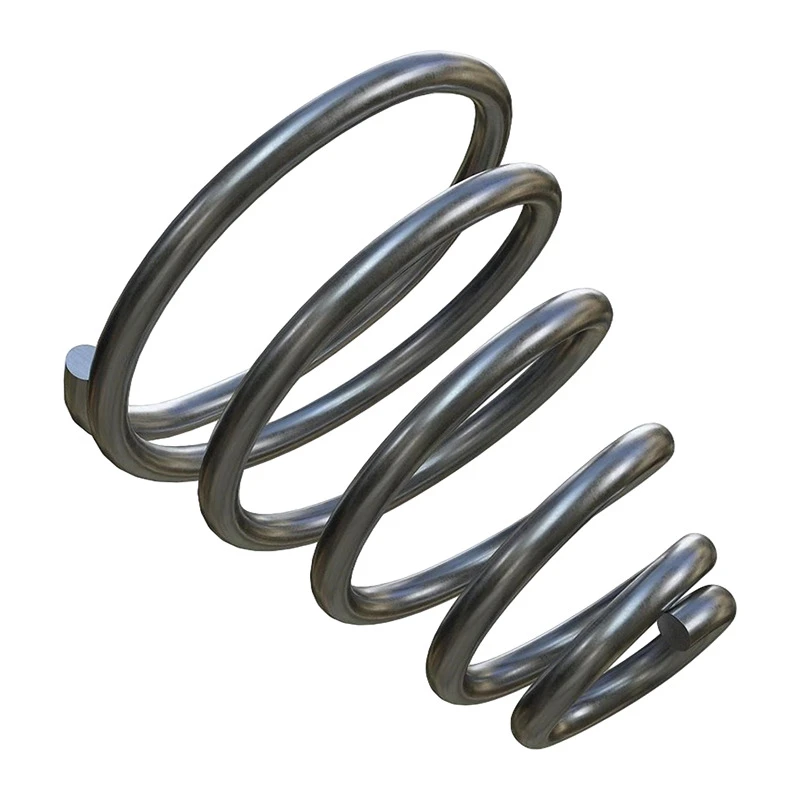
1. Compression Springs
Characteristics: Withstands axial pressure, stores energy, and provides shock absorption. In agricultural machinery, compression springs are commonly used in suspension systems and shock absorbers.
Example: Tractor seat shock absorber springs absorb the impact of road bumps through compression deformation, improving driver comfort.
2. Tension Springs
Characteristics: Withstands axial tension, stores energy, and provides restoring force. In agricultural machinery, tension springs are commonly used in control mechanisms and braking systems.
Example: Harvester header lifting springs stretch when the header needs to be raised, storing energy; when the header lowers, the spring contracts, helping the header return to its original position.
3. Torsion Springs
Characteristics: Withstands torque, stores energy, and provides torsional restoring force. In agricultural machinery, torsion springs are commonly used in control mechanisms and valve controls.
Example: Clutch operating springs in agricultural machinery control the engagement and disengagement of the clutch through torsional deformation, enabling power transmission and disconnection.
Characteristics
1. High Strength
Agricultural machinery often needs to withstand significant loads and impacts during operation. Therefore, agricultural machinery springs require high strength to ensure normal operation in harsh working environments.
They are generally made of high-strength spring steel, and their strength and toughness are improved through heat treatment and other processes.
2. Corrosion Resistance
Agricultural machinery typically operates outdoors and is susceptible to corrosion from rain, mud, pesticides, etc. Therefore, agricultural machinery springs need good corrosion resistance to extend their service life.
Surface treatments such as galvanizing, chrome plating, and spraying can be used to improve the corrosion resistance of the springs.
3. High Reliability
Agricultural machinery springs play a crucial role in agricultural production. Failures can lead to malfunctions in the machinery and even safety accidents. Therefore, agricultural machinery springs need high reliability.
During the design and manufacturing process, strict control over the dimensional accuracy and mechanical properties of the springs is necessary to ensure stable and reliable quality.
4. Easy Maintenance
Due to the harsh operating environment of agricultural machinery, springs are prone to wear and damage. Therefore, agricultural machinery springs need to be easy to maintain so that they can be repaired and replaced in a timely manner when malfunctions occur.


