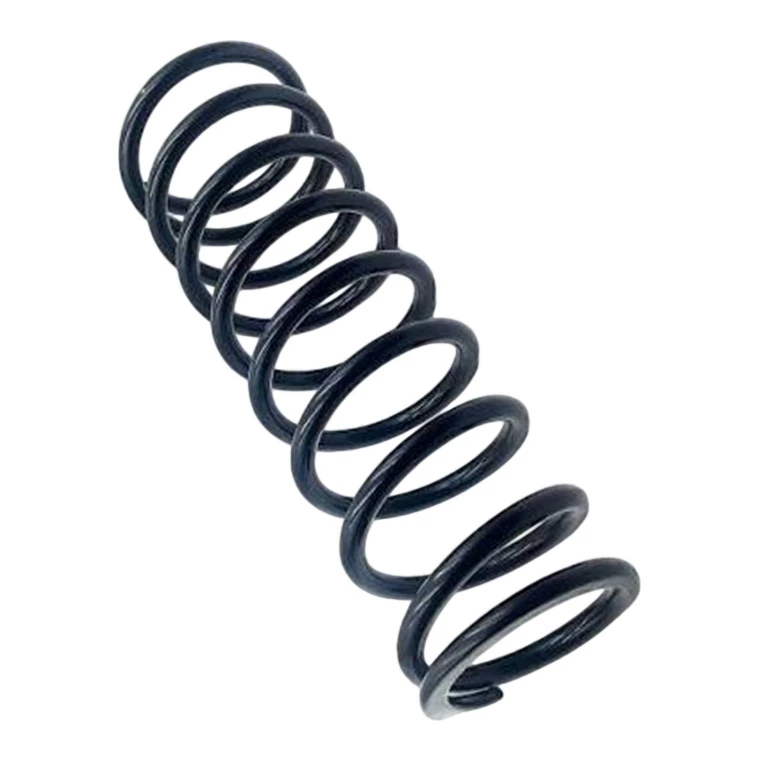
The industry has a clear definition of precision springs, typically referring to springs with a wire diameter tolerance ≤ ±0.01mm, a free length tolerance ≤ ±0.1mm, and an elasticity tolerance ≤ ±3%. Springs with higher precision must meet the following requirements: elastic coefficient tolerance ≤ ±5%, free length tolerance ≤ ±0.05mm, and deformation repeatability error ≤ 0.01mm under operating conditions.
Companies improve product performance by mastering specialized processes. For example, Fuchun Springs has mastered specialized shot peening technology, independently developed SOF technology, and Pice hardening technology, among other core technologies leading industry progress. Lizhou Precision has independently developed high-precision molding dies and multi-axis CNC integrated molding technology, achieving domestic substitution in categories such as wave springs.
The design of precision springs requires rigorous calculations. During the design process, it is necessary to calculate the effective number of coils, the ratio of spring mean diameter to wire diameter (recommended to be controlled between 4-10), and the allowable stress to ensure that it does not exceed the material fatigue limit.
Precision control relies on advanced testing technology. For example, to improve product precision, Fuhong Spring introduced a German Carl Zeiss coordinate measuring machine to control tolerances within 0.01 millimeters.