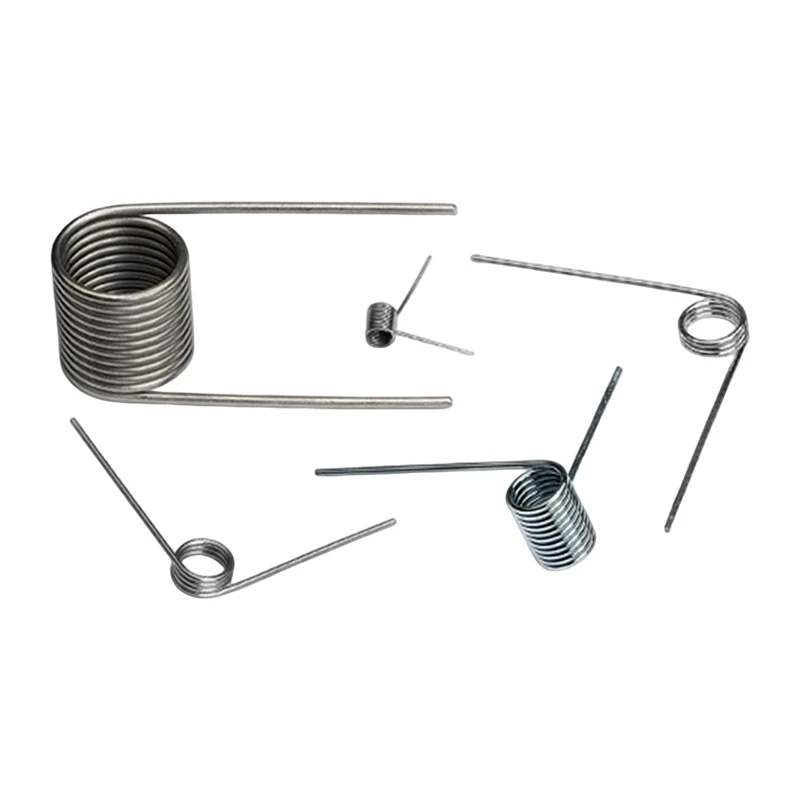
In electronic devices, precision springs are often made of 304 stainless steel or phosphor bronze, with a wire diameter ranging from 0.05 to 0.2 mm and a free length typically not exceeding 5 mm. This allows for miniaturized installations in circuit boards and microswitches, while also providing good conductivity and corrosion resistance. In medical devices, precision springs require biocompatible materials such as titanium alloys or medical-grade stainless steel, with dimensional tolerances controlled within ±0.003 mm to accommodate precision components like syringes and sampling needles. In industrial automation, precision springs are often made of piano wire, with an elastic modulus reaching 206 GPa and a recovery rate of at least 98%. This allows them to withstand the high-frequency movements of robotic arms and sensors, with some products boasting a lifespan exceeding 800,000 cycles.
Precision spring products include high-precision springs, elastic functional components, molded elastic components, and combined elastic components. These products are used in industries such as automotive, rail transportation, power, medical, machinery, and electronics for functions such as force output, safety fastening, and conductive connections.