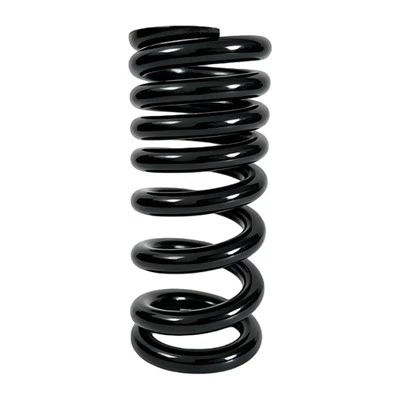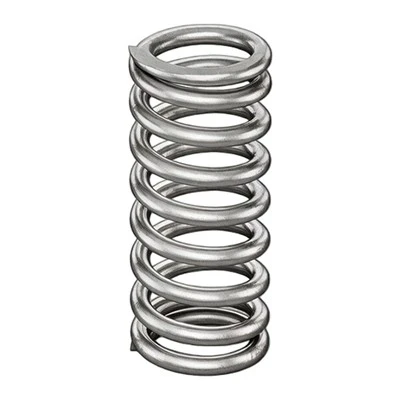
Hey there! As a supplier of Extension Helical Springs, I've been in the spring business for quite a while. Over the years, I've had customers come to me with all sorts of questions about these springs. One question that keeps popping up is about the resonance problem of an Extension Helical Spring. So, I thought I'd take the time to break it down for you.
First off, let's understand what a resonance problem is in general. Resonance occurs when a vibrating system or external force drives another system to oscillate with greater amplitude at a specific frequency. In the case of an Extension Helical Spring, this can lead to some serious issues.
When an Extension Helical Spring is subjected to a periodic force that matches its natural frequency, resonance occurs. The natural frequency of a spring depends on several factors, including its material, dimensions, and the way it's installed. For example, a spring made of a stiffer material might have a higher natural frequency compared to a softer one.
Now, why is resonance a problem for these springs? Well, when resonance happens, the amplitude of the spring's vibration can increase significantly. This can cause excessive stress on the spring, leading to premature wear and fatigue. In extreme cases, it can even cause the spring to break.
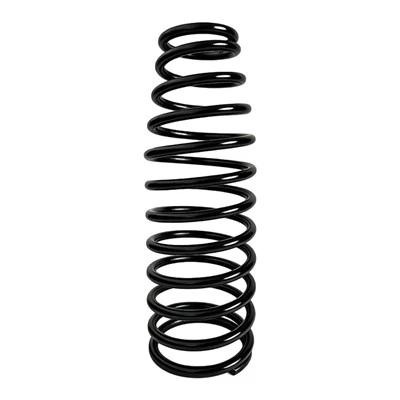
Let's consider some real - world scenarios where the resonance problem of an Extension Helical Spring can rear its ugly head. In automotive applications, for instance, if the suspension system's extension helical springs resonate, it can lead to a bumpy and uncomfortable ride. It can also affect the handling of the vehicle, making it less safe. You can check out our Automotive Suspension Spring for more details on springs designed for such applications.
In industrial machinery, resonance in extension helical springs can cause vibrations that disrupt the normal operation of the equipment. This can lead to increased maintenance costs and downtime. Imagine a conveyor belt system where the springs in the tensioning mechanism resonate. It could cause the belt to slip or misalign, affecting the entire production line.
So, how can we identify if a resonance problem exists in an Extension Helical Spring? One way is to use vibration testing. By measuring the vibration frequency of the spring under normal operating conditions and comparing it to its calculated natural frequency, we can determine if resonance is occurring. If the measured frequency is close to the natural frequency, then there's a good chance of resonance.
Another sign of a resonance problem is excessive noise or vibration in the system where the spring is installed. If you notice a rattling or humming sound that seems to be coming from the spring area, it could be a sign of resonance. Also, if the spring shows signs of abnormal wear, such as cracks or deformation, resonance could be the culprit.
Now, let's talk about how to prevent or mitigate the resonance problem. One approach is to change the natural frequency of the spring. This can be done by altering its dimensions. For example, increasing the wire diameter or changing the number of coils can change the spring's stiffness and, in turn, its natural frequency.
Another way is to use damping techniques. Damping is the process of dissipating energy from the vibrating system. This can be achieved by using materials with high damping properties or by adding a damping device to the spring. For example, we can use rubber pads or viscous dampers to absorb some of the energy and reduce the amplitude of the vibration.
As a supplier, we offer a wide range of Extension Helical Springs with different specifications to meet various needs. We also have 316 Stainless Steel Spring, which is known for its corrosion - resistance and durability, making it suitable for applications where the spring is exposed to harsh environments.
Our High Torque Torsion Spring is another great option for applications that require high torque. These springs are designed to withstand heavy loads and provide reliable performance.
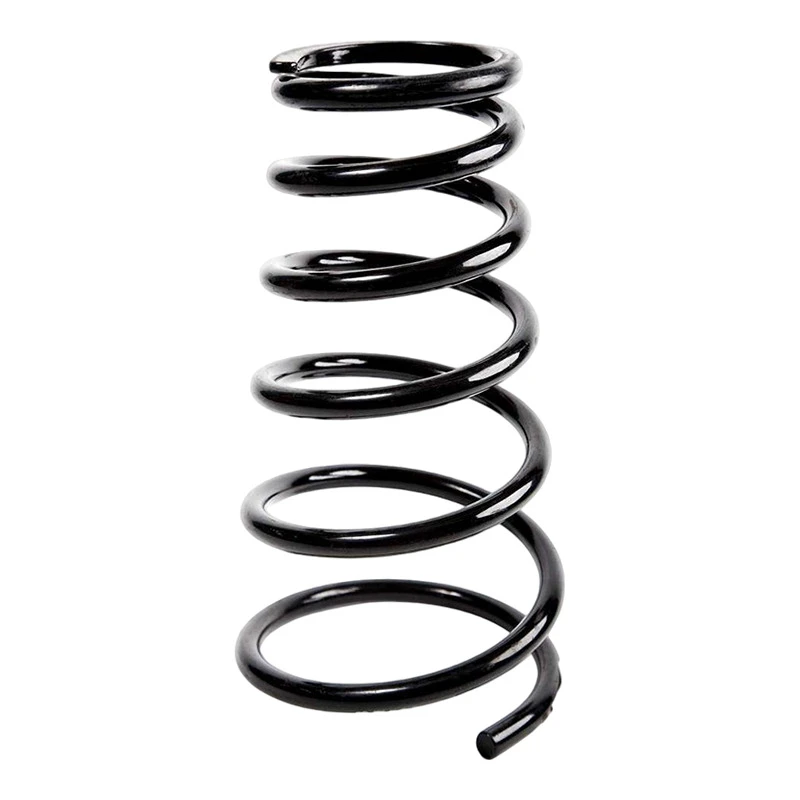
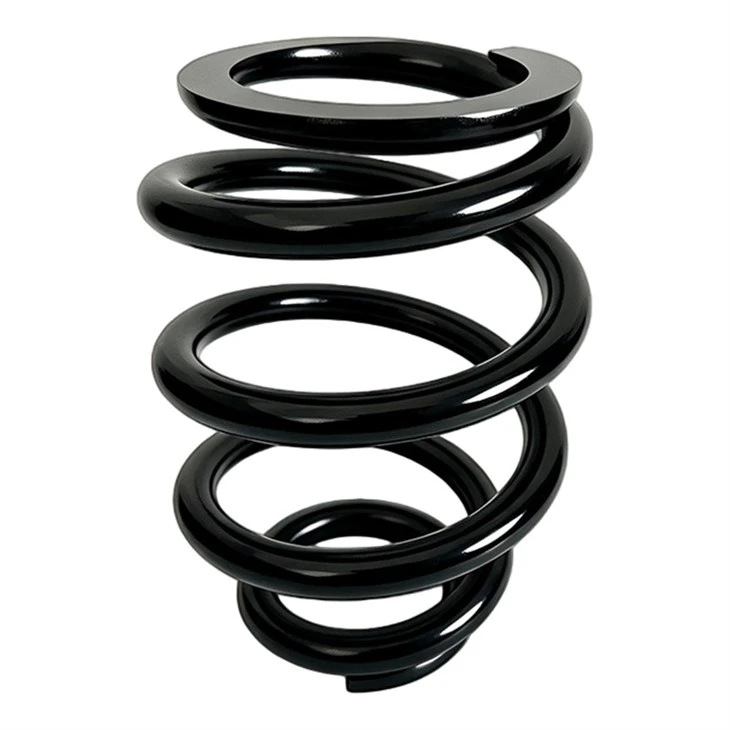
If you're looking for compression springs, our 316 Stainless Compression Springs are a top - notch choice. They're made from high - quality stainless steel and can handle significant compression forces without losing their shape.
And for applications where torsion is involved, our Stainless Steel Torsion Spring is a reliable solution. It offers excellent torsional strength and long - term performance.
If you're facing any issues with resonance in your Extension Helical Springs or are looking for the right spring for your application, don't hesitate to reach out. We're here to help you find the best solution and ensure that your equipment runs smoothly. Whether you need advice on spring selection or want to discuss custom - made springs, we're just a call or a message away.
Contact us today to start a discussion about your spring requirements. We're confident that we can provide you with high - quality springs and the support you need to keep your operations running efficiently.
References
- "Mechanical Springs: Design, Manufacture and Stress Analysis" by Timoshenko, S.
- "Handbook of Spring Design and Application" by Wahl, A. M.