In the manufacturing and engineering industries, special shaped springs play a crucial role in a wide array of applications. From small - scale electronic devices to large - industrial machinery and even in automotive and aerospace sectors, these springs are designed to provide unique mechanical functions. As a supplier of special shaped springs, one of the most frequently asked questions I encounter is whether there are any standards for the size tolerance of special shaped springs.
Understanding Special Shaped Springs
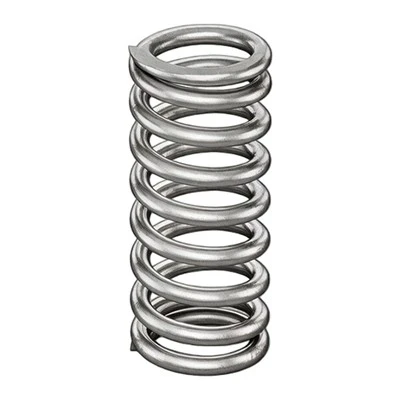
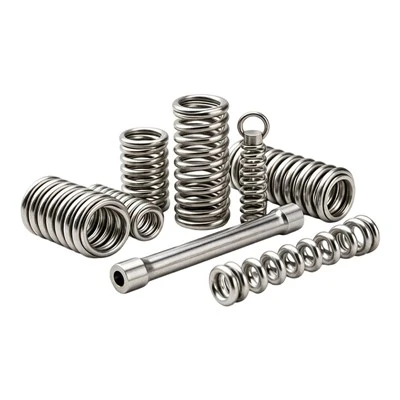
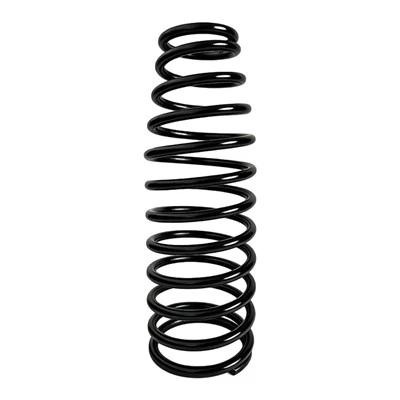
Special shaped springs deviate from the traditional helical or coil spring designs. They can take on forms such as torsion bars, flat springs, conical springs, or custom - fabricated shapes tailored to specific application requirements. These non - standard spring designs are developed to fit into unique spaces, provide specific force characteristics, or meet particular performance criteria. For instance, in some precision instruments, small - sized and intricately shaped springs are required to ensure accurate movement and positioning. Our company offers various types of special shaped springs, including Small Compression Coil Springs, which are ideal for applications where limited space and high compression resistance are needed.
The Importance of Size Tolerance
Size tolerance refers to the allowable variation in the dimensions of a manufactured part. In the case of special shaped springs, accurate size control is of utmost importance. A spring that is too large or too small can lead to a series of problems. If the overall dimensions of a spring exceed the tolerance range, it may not fit properly into the assembly, which can cause interference, instability, or even complete failure of the device. For example, in Small Strong Springs used in handheld electronic gadgets, a slight deviation in size can prevent the proper functioning of the device, leading to malfunctions or reduced product lifespan.

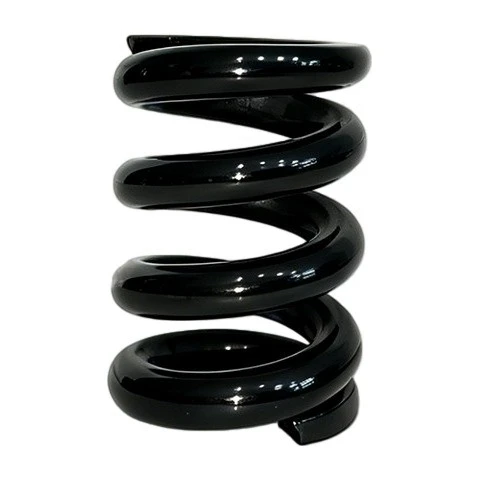
On the other hand, the internal dimensions of a spring, such as the wire diameter and the pitch, also have a significant impact on its mechanical properties. A change in wire diameter can alter the spring rate, which is the force required to compress or extend the spring by a certain distance. If the pitch of a coil spring is not within the specified tolerance, the force distribution along the spring may be uneven, affecting its performance and durability.
Industry Standards for Size Tolerance
When it comes to the size tolerance of special shaped springs, while there are some general guidelines set by international and national standards organizations, the exact requirements often depend on the specific application.
The International Organization for Standardization (ISO) has issued a series of standards related to springs, which cover aspects such as material properties, manufacturing processes, and dimensional tolerances. For example, ISO 10243 provides guidelines on the dimensions and tolerances of cold - formed helical compression springs. However, these standards are more focused on common spring types, and special shaped springs may not always be fully covered.
In the United States, the American Society of Mechanical Engineers (ASME) also has standards for springs, including B18.22.1, which deals with general requirements for compression springs. These standards can serve as a reference for determining the size tolerance of special shaped springs, but they need to be adapted according to the unique characteristics of each spring design.
Factors Affecting Size Tolerance
Several factors can influence the achievable size tolerance of special shaped springs.
- Manufacturing Process: The manufacturing process used to produce special shaped springs has a direct impact on size tolerance. For example, traditional machining methods such as turning and milling may have certain limitations in achieving high precision compared to advanced manufacturing techniques like wire electrical discharge machining (EDM). Wire EDM can produce springs with very tight tolerances, but it is often more expensive and time - consuming.
- Material Properties: The material used in the spring also plays a role in size tolerance. Different materials have different thermal expansion coefficients, elastic moduli, and ductility. For example, stainless steel has different properties compared to high - carbon steel. During the manufacturing process, changes in temperature can cause the material to expand or contract, which may affect the final dimensions of the spring. Our Stainless Steel Extension Spring is made of high - quality stainless steel, and we take into account its material properties to ensure the best possible size tolerance.
- Design Complexity: The more complex the design of a special shaped spring, the more difficult it is to control the size tolerance. Complex shapes may require multiple manufacturing steps, and each step can introduce potential errors. For example, a spring with a non - linear shape or a combination of different geometries may need more precise manufacturing and inspection processes to meet the required size tolerance.
Quality Control Measures
To ensure that the size of special shaped springs meets the specified tolerance, we implement a comprehensive quality control system in our manufacturing process.
- Precision Measurement Tools: We use advanced measurement tools such as coordinate measuring machines (CMMs) to accurately measure the dimensions of the springs. CMMs can provide high - precision measurements of various geometric elements, including length, diameter, and angle. This allows us to detect even the slightest deviations from the design specifications.
- Process Monitoring: We closely monitor each step of the manufacturing process to ensure that the production conditions are stable. This includes monitoring the temperature, humidity, and machine parameters during the forming, heat - treating, and finishing processes. By maintaining stable production conditions, we can minimize the impact of external factors on the size of the springs.
- Inspection at Different Stages: We conduct inspections at multiple stages of the manufacturing process, from raw material inspection to the final product inspection. This helps us to identify and correct any potential problems early, reducing the risk of producing springs that do not meet the size tolerance requirements.
Application - Specific Tolerance Requirements
Different applications have different tolerance requirements for special shaped springs.
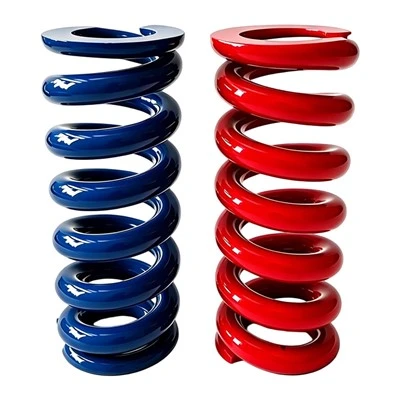
- Automotive Industry: In the automotive industry, springs are used in various components such as suspension systems, engine valves, and clutch mechanisms. For Motorcycle Springs, high precision and tight size tolerances are required to ensure the safety and performance of the vehicle. A small deviation in the spring size can affect the handling, stability, and comfort of the motorcycle.
- Industrial Machinery: In industrial machinery, springs are used for functions such as vibration isolation, force transmission, and positioning. Industrial Tension Springs need to have accurate size tolerances to ensure proper operation of the machinery. If the spring size is not within the tolerance range, it can lead to increased wear and tear, reduced efficiency, and even breakdowns of the machinery.
- Medical Devices: In medical devices, springs are often used in applications where precision and reliability are critical. For example, in syringe pumps or surgical instruments, the size tolerance of the springs must be extremely tight to ensure accurate dosing or smooth operation.
Conclusion
In conclusion, while there are some general industry standards for size tolerance of springs, the exact requirements for special shaped springs are highly application - specific. As a supplier of special shaped springs, we are committed to providing high - quality products that meet the strict size tolerance requirements of our customers. Through the use of advanced manufacturing processes, precision measurement tools, and comprehensive quality control measures, we ensure that our springs are of the highest quality.
If you are in need of special shaped springs for your specific application, we invite you to contact us for a detailed discussion. Our team of experts is ready to work with you to understand your requirements and provide the best - fitting spring solutions. We look forward to the opportunity to serve you and contribute to the success of your projects.
References
- International Organization for Standardization (ISO). ISO 10243 - Cold - formed helical compression springs - Dimensions and tolerances.
- American Society of Mechanical Engineers (ASME). B18.22.1 - Compression springs, general requirements.